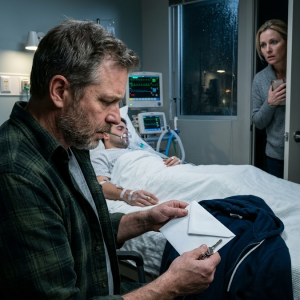
same evening, while I was learning how to get from the bed to the bathroom with a walker, my phone lit up with seven missed calls from my mother.
Then a voicemail.
Not: How are you feeling?
Not: Is Owen okay?
Not even: Did Jacob get home?
What she said was, “Why didn’t the transfer go through? My card just got declined at the port.
Call me back right now.”
I listened to it twice.
The second time, I laughed.
Not because it was funny.
Because something in me was done begging reality to be less ugly.
I was discharged two days later.
The postpartum nurse helped with Owen until I could manage safer routines seated on the couch or bed.
Jacob learned bottle prep faster than either of us expected.
My grandfather came by every afternoon with groceries or folded laundry or some tiny household repair I hadn’t noticed needed doing.
On the third day home, my mother sent a text that read, We need to talk when I get back.
This childish stunt needs to stop.
I stared at the word stunt for a long time.
My fractured pelvis was a stunt.
My newborn needing care was a stunt.
Her canceled allowance was the emergency.
So I texted back three words.
Come Saturday.
Noon.
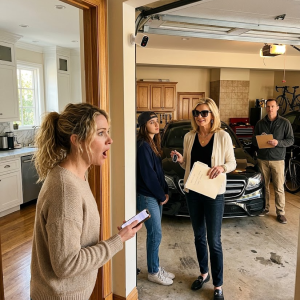
She arrived wearing white linen and a tan she had no business having while I was still moving around my own house in a brace.
She stepped inside with oversized sunglasses on her head and a look of irritation so open it bordered on theatrical.
Then she saw who was in the living room.
Jacob was standing by the fireplace.
My grandfather was at the dining table.
And beside him was the manila envelope.
“What is this?” she asked.
I stayed seated because I had to, not because I wanted to.
Owen was asleep in the bassinet next to me.
“Did Dad’s life insurance pay off the house?” I asked.
Her face changed in one flicker.
It was fast, but it was there.
Then she recovered.
“That’s not the point.
Homeownership still costs money.”
“That’s not what I asked.”
She set her purse down a little too hard.
“Melissa, after all I’ve done for this family, I’m not going to sit here and be interrogated because you’re emotional.”
My grandfather slid the payoff letter across the table.
“Answer her,” he said.
She glanced at it and looked away.
“I had expenses.”
I reached for the folder Jacob had prepared and pulled out printed screenshots of her messages.
I laid them one by one on the table.
Mortgage is short this month.
The mortgage company won’t wait.
I’m terrified of losing the house.
Please help me keep up with the mortgage.
Her eyes moved over the pages and then to me.
For the first time in my life, I saw my mother without the blur of obligation.
No halo of sacrifice.
No special pleading.
Just a woman measuring which version of the truth would cost her the least.
“I needed help,” she said finally.
“Your father left me alone with everything.”
“You told me the house would be lost,” I said.
“There was no mortgage.”
She folded her arms.
“I was a widow.
I was scared.
You had a good job.
Family helps family.”
Jacob