The thing that saves children more reliably than rage.
I woke Lila.
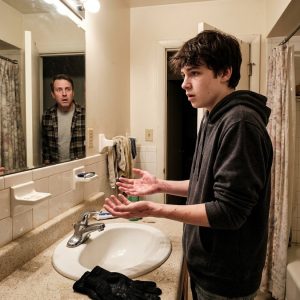
She took one look at my face, then at the towel around Nate’s hands, and did not ask a single foolish question. She sat beside him on the edge of the bathtub and said, “Sweetheart, I’m going to help your uncle now. You are safe.”
I called the emergency pediatric line first.
Then I called a lawyer.
Then, because I knew exactly what my parents would do if they got one minute of warning, I called Child Protective Services before I called anyone else in the family.
The nurse at the children’s urgent care photographed Nate’s hands under bright white light while he stared at the wall and answered in yes-or-no words. The doctor was careful in that way good doctors are careful when anger is trying to climb into their voice. She documented fresh skin erosion, older scar tissue, repeated sharp-force injuries, and signs of obsessive washing.
That last part mattered.
Because once Nate was in a place where no one was watching, the truth kept coming.
He washed because my father said dirty blood sat in the lines of his hands.
He wore gloves because my mother said people would ask questions if they saw what “his own behavior” had led to.
He slept in long sleeves because there were smaller words on his arms too, less carved than scratched, mostly from the first months after my sister died when his grief made him forgetful and “disrespectful.”
The hospital social worker sat with us until nearly sunrise.
At one point she asked Nate whether anyone else in the family knew.
He looked at me.
Then at Lila.
Then down at the blanket over his knees.
“Aunt Rachel knew Grandpa used marker,” he said. “She laughed once and said maybe it would finally make me useful.”
Rachel was my older sister.
The one who mailed birthday cards with twenty-dollar bills and Bible verses.
The one who always told people our parents were “strict but faithful.”
The one who lived two counties over and somehow always managed to arrive after the hardest part of every family disaster.
By morning, the shape of the case had widened.
This was no longer just abuse.
It was a system of humiliation, concealment, and family collaboration.
CPS filed an emergency protective hold that same day. Nate did not leave with us as “family doing their best.” He left as a protected minor under active investigation, placed temporarily in our home with court support and a no-contact restriction against my parents pending hearing.
When my father finally called, he did not sound guilty.
He sounded offended.
“What have you told people?” he demanded.
I was standing in the hospital parking garage, staring at concrete like it might keep me from exploding.
“I told them what you did to his hands.”
His voice hardened. “That boy lies when he wants attention.”
“He has your words carved into his skin.”
Silence.
Then: “Discipline has always looked ugly to weak people.”
There are sentences so monstrous they bring clarity faster than evidence.
“You are never seeing him again,” I said.
He laughed once. “You think you can keep family from family?”
I hung up on him.
My mother called next.
Of course she did.
Not to apologize.