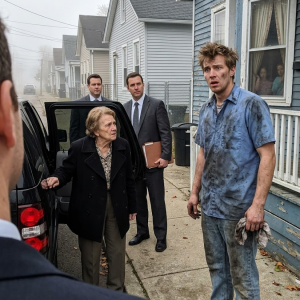
The criminal charges came slowly but decisively.
My father was charged with felony child abuse and aggravated assault tied to repeated cutting injuries.
My mother was charged with failure to report, aiding concealment, and child endangerment.
Rachel avoided criminal charges only because the district attorney could not place her often enough or specifically enough at the incidents, but CPS named her in findings related to failure to protect and barred her from unsupervised contact with Nate permanently.
The church stood by my parents for about two weeks.
Then the photographs from the medical file surfaced in the county hearing record.
After that, even their favorite kind of mercy got very quiet.
Nate did not get better quickly.
I want to say safety solved everything. It didn’t.
Safety just made healing possible.
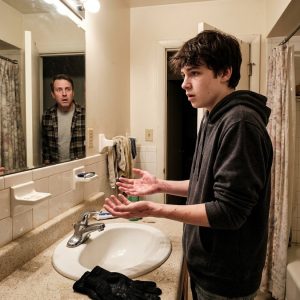
For the first month, he slept with socks on his hands because gloves had started to mean fear but bare skin still made him panic. He apologized every time he asked for food. He stood when Lila entered a room, no matter how many times she told him not to. He washed his hands until they cracked if he touched raw meat, dust, dog hair, anything messy. The therapist called it ritualized contamination control wrapped around punishment conditioning, which is the professional version of saying someone had taught him that his own body was a crime scene.
Lila was better with that part than I was.
I was good at protection.
She was good at gentleness.
When Nate flinched because she reached for his plate too quickly, she just slowed down the next time. When he panicked after smearing barbecue sauce on one of his fingers, she sat at the sink with him and washed one hand together, then the other, then turned the faucet off before he could start scrubbing. When he told her one night that he thought his palms looked evil, she took both hands in hers and said, “Baby, evil is what was done to you. Not what you’re made of.”
He believed her faster than he believed me.
That didn’t hurt.
It made sense.
Children trust softness when force has worn his own face too long.
The first time Nate laughed in our house without checking whether it was allowed, it happened by accident. The dog stole a hamburger bun off the counter and ran full speed into the screen door. Nate made this startled bark of laughter and then clapped his gloved hands over his mouth.
Lila and I both froze.
Then I said, “Well, now he’ll think you approve.”
And Nate laughed again.
After that, little things began returning to him.
Music with his bedroom door open.
Seconds at dinner.
Complaining about math.
Leaving one glove off while he played video games.
Falling asleep on the couch with his hands uncovered and one scarred palm turned upward like an unanswered question.
We adopted the dog that winter because Nate finally admitted he hoped we would.
I testified at my father’s sentencing six months later.
So did Nate’s therapist. So did the pediatric specialist who described the injuries as layered harm: physical pain designed to reinforce identity damage. That phrase stayed with me. Layered harm. It felt truer than any dramatic label.
My father never admitted guilt.
Not really.
He admitted methods.
He admitted “excessive correction.”