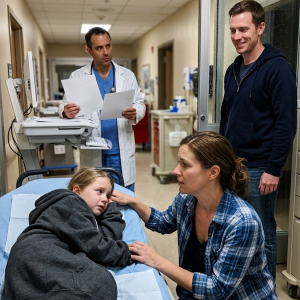
At 3:17 a.m., Dorothy Hale’s phone vibrated on the nightstand, and her body reacted before her mind did.
For forty years she had been a cardiothoracic surgeon, and calls in the middle of the night had trained her muscles better than habit ever could.
There had been a time when a phone ringing before dawn meant an aortic rupture, a chest cracked open under bright lights, a nurse already shouting for blood.
Her body still remembered those years even if her retirement papers said she was done.
So when the screen lit up with her granddaughter’s name, Dorothy was already sitting upright before the second buzz.
She grabbed the phone, not her glasses.
“Grandma?”
Brooke’s voice was low and controlled in a way that frightened Dorothy more than crying would have.
The girl was sixteen years old, all sharp intelligence and buried softness, and Dorothy knew the difference between a child who was upset and a child who was trying not to let someone hear panic.
“I’m here,” Dorothy said.
“Tell me.”
“I’m at St.
Augustine.
In the emergency room.
My arm is broken.
He told them I fell down the stairs.”
Dorothy closed her eyes once.
He.
Not Marcus.
Not Mom’s husband.
Not my stepfather.
He.
“And your mother?” Dorothy asked.
Brooke’s breathing changed on the line.
“She’s sitting with him.”
Dorothy stood.
“What room?”
“I don’t know.
There’s a curtain.
Grandma…
please come before he comes back in.”
“I’m leaving now,” Dorothy said.
“Listen carefully.
Do not say anything else to anyone unless a doctor asks if you can breathe or if your pain changes.
Keep your phone hidden.
I’m coming.”
She ended the call and dressed with the discipline that had once saved lives.
Beige leather jacket.
Wallet.
Keys in the right pocket.
Phone in the left.
Hair tied back with her fingers.
Wedding band.
Watch.
Four minutes later, she was in the car, cutting through a rain-slick Charleston that looked peaceful from a distance and felt dangerous up close.
As she drove, her mind began sorting facts.
It pulled up the note file first.
She had started it eight months ago after Brooke appeared at her house in long sleeves despite the heat.
Brooke had reached for a mug, the fabric shifted, and a bruise bloomed into view on her forearm.
Dorothy had known instantly it wasn’t from falling off a bike or bumping into a doorframe.
After decades of treating bodies, she knew the shape of force.
She knew the geometry of fingers.
Brooke had offered a rehearsed story.
Dorothy had listened without challenging her, cleaned the skin gently, kissed the side of the girl’s head, and after Brooke left, she had opened a note on her phone.
October 14.
Left forearm.
Contact bruise inconsistent with stated mechanism.
Long sleeves in warm weather.
Story appeared rehearsed.
Did not challenge.
Observe.
More entries followed.
Cancelled visits.
Flinches.
Excuses.
Changes in posture.
The way Marcus Webb answered questions meant for Diane.
The way Brooke’s laughter had flattened into careful smiles after Marcus moved into the house.
The way Diane had become harder to reach and easier to offend whenever Dorothy asked ordinary questions.
Forty-one entries by the time Brooke called from that hospital.
Dorothy had not made those notes because she enjoyed suspicion.
She made them because