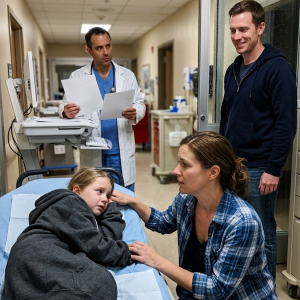
statement, Brooke’s interview, medical evidence, and the pattern established in records.
Marcus hired a lawyer and tried to reframe everything as a family misunderstanding sharpened by a meddling grandmother with old grudges and too much influence.
That defense lasted until evidence started stacking in ways his charm could not flatten.
The counselor’s notes.
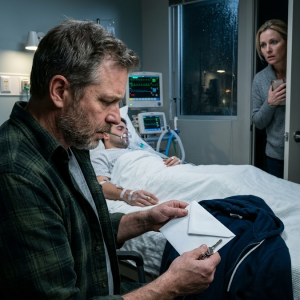
The hospital report.
Radiology findings.
Brooke’s messages to a friend describing fear at home.
Dorothy’s documented observations.
Security footage showing Marcus pacing outside the treatment area, repeatedly attempting to re-enter despite being told not to.
The final blow came from Marcus’s own phone.
During discovery, investigators recovered a deleted draft text he had typed to Diane while she was in the bathroom at the hospital.
It read: If you love me at all, you’ll stick to the stairs story or we both lose everything.
Both.
Not all three of them.
Both.
That one word told the whole story of his marriage.
Marcus took a plea agreement months later rather than risk trial on charges that included assault of a minor and witness intimidation.
He received prison time, supervised release conditions, and a permanent protective order forbidding contact with Brooke.
Diane moved into a small apartment on the other side of town after the house was sold.
She attended counseling.
Some weeks she showed up for supervised visits with Brooke and said the right things.
Other weeks she sat across from her daughter and looked so ashamed that the room itself felt bruised.
Healing did not come neatly.
Brooke had nightmares.
She startled easily.
She apologized too often at first, especially when she needed help with things her cast kept her from doing.
Dorothy corrected that every single time.
“You say thank you,” she told her.
“You do not apologize for being cared for.”
They developed rituals.
Tea on the back porch.
Silent homework at the kitchen table.
Late-night walks when sleep wouldn’t come.
Dorothy showed Brooke how to cook three things properly and how to change a tire badly but bravely.
Brooke relearned the shape of a home where nobody monitored the weather of one man’s moods.
The first time Brooke laughed the old way again, head tipped back, shoulders loose, Dorothy had to turn toward the sink so the girl wouldn’t see her cry.
Months later, after the cast was gone and physical therapy had returned full range of motion, Brooke stood in Dorothy’s kitchen wearing a T-shirt for the first time in years without pulling at the sleeves.
“Do you think Mom really loves me?” she asked.
Dorothy dried her hands and answered carefully.
“Yes,” she said.
“I think she does.
I also think love without courage can become dangerous.
And you are allowed to judge people by what their love actually protected.”
Brooke absorbed that in silence.
It was not a comforting answer.
It was a true one.
On the first anniversary of that night, Brooke asked Dorothy to take her to the hospital parking garage.
They stood on level two in the warm dark, Charleston spread out around them under evening light.
Brooke leaned on the railing, no cast, no blanket, no fear narrowing her body anymore.
“I used to think the worst part was him,” Brooke said.
Dorothy waited.
“But sometimes I think the worst part was not knowing if my own