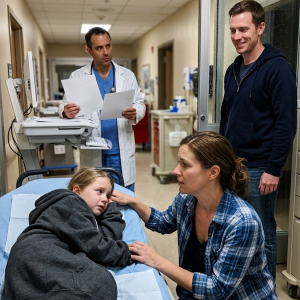
mother would choose me.”
Dorothy looked at her granddaughter’s face and understood, with the terrible precision age sometimes grants, that violence does one kind of damage and abandonment does another.
Brooke wasn’t asking for an answer.
She already knew one.
So Dorothy gave her the only thing that mattered now.
“She should have chosen you immediately,” Dorothy said.
“No hesitation.
No excuses.
No delay.”
Brooke nodded, and the two of them stood there in the place where everything had changed.
Later, people in the family would divide themselves the way families always do around ugly truth.
Some said Diane was a victim too, manipulated and frightened, deserving grace for finally telling the truth.
Others said a mother who waits until a bone breaks in front of her has already made her choice too many times.
Dorothy never argued about it at holiday tables.
She had seen enough operating rooms to know that some damage can be repaired and some damage only learns how to live with a scar.
What she knew for certain was this: Brooke survived because one person documented what everyone else wanted to doubt, one doctor told the truth, and one girl decided, in a hospital bed at 3:17 in the morning, that silence had cost enough.
Everything after that depended on what the adults did next.
And that, Dorothy would think for years afterward, was the part no one should ever forgive too easily.