the truth is turning against you too.”
The deputy placed a hand near Marcus’s elbow.
“Sir, I’m going to ask you to come with me.”
Marcus jerked away.
Not violently enough to justify force, but enough to expose himself fully.
“There’s no proof,” he snapped.
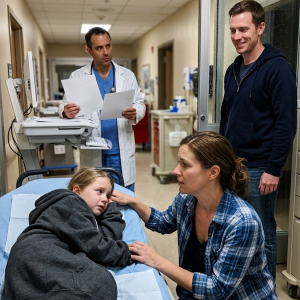
James stepped out of the bay holding the chart.
“There is medical evidence,” he said.
Lena held up the school statement.
“There are prior disclosures.”
Patricia folded her arms.
“And there are witnesses to your behavior tonight.”
Marcus looked around and finally understood what room he was in.
He wasn’t in his kitchen.
He wasn’t in his car.
He wasn’t in a house where fear could be isolated and renamed.
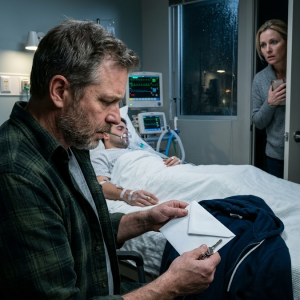
He was in a hospital full of documentation.
The deputy guided him away.
He tried to turn back once, looking for Diane, for leverage, for one last sign that she would cave and smooth this over the way she always had.
She did not look at him.
When he disappeared down the corridor, the entire floor seemed to exhale.
Then Dorothy turned back to Bay Four.
Brooke was crying now, but silently, as if she did not yet trust the sound of her own relief.
Dorothy sat beside her and placed one hand gently over her uninjured one.
“It’s done for tonight,” Dorothy said.
“You are not going back there.”
Brooke nodded and broke apart completely.
The next hours were paperwork, signatures, treatment plans, custody discussions, temporary placement approvals, and the kind of bureaucratic language that always sounds too small for the life-altering things it governs.
Because Diane had finally provided a statement confirming the assault, CPS authorized Brooke to be discharged into Dorothy’s care pending an emergency protective hearing.
The hospital documented prior injuries.
Brooke’s counselor agreed to provide records.
A forensic interviewer was scheduled for the next day.
By sunrise, Brooke was asleep in a wheelchair in the discharge area, her splinted arm cradled carefully against her body.
Diane sat across from Dorothy in a quiet consult room, looking like a woman who had just woken up inside the ruins of her own choices.
“I knew,” Diane whispered.
Dorothy did not rescue her from the sentence.
“I didn’t know every time,” Diane said.
“But I knew enough.
I knew when she stopped wanting to be home.
I knew when she flinched.
I knew when he blamed her for everything.
And every time I came close to facing it, he’d cry, or apologize, or tell me I was making him the villain, and I…”
She covered her mouth with her hand.
“I hated myself for needing someone.
I hated myself for letting that matter more than my daughter feeling safe.”
Dorothy looked at her for a long moment.
There are some apologies too small for the harm they follow.
This was one of them.
But there was also real collapse in Diane’s face, and Dorothy understood that truth was not useless merely because it arrived late.
“You do not get forgiveness tonight,” Dorothy said evenly.
“What you get is a chance to do the next right thing without lying again.
Those are not the same.”
Diane nodded through tears.
The hearing three days later granted Brooke temporary placement with Dorothy and a protective order against Marcus.
The district attorney pursued charges based on Diane’s